Top 10 Yuri Visual Novels

There
is something special about the Yuri genre, it captures a feeling of
wistful longing and the power held by our desire for human connection.
Visual Novels are an especially good medium for capturing these
emotions due to their inherent leaning towards more internal focused
narratives through the extensive time we spend in the characters’
heads. This list differs from my Top 10 LGBTQ+ list in that it is
focused around the games which encapsulate the feelings which are the
strength of the Yuri genre. So let us find our destined love and
begin to count down.
Top 10
10. A Kiss for the Petals Series (NSFW) -
VNDB Play
Time – 4 hours each

If
there is one series which has attempted to cash in on Yuri genre to
the largest extent it is A Kiss for the Petals. These
games focus entirely on a different single pairing each game and
follow their journey to becoming a couple. Since they are a mass
produced product there is a predictable formula to how events will
transpire with variations based on the personalities of the lovers.
This does leave the games feeling stale if they are played back to
back and there is no doubt the developer drained all the life they
could out this limited version of the Yuri setup. However, it does
manage to capture the special emotions of the genre with surprising
regularity and it is difficult to pass this off as an accident. Each
story has just enough of this genre understanding that the games
collectively manage to make it onto this list, just make sure to
pick out the pairings you like for the shortest and sweetest
experience possible.
9. Nurse Love Addiction

Of
all the games on the list this is the one which almost did not make
it. It does contain the feelings required for an excellent Yuri tone
and narrative but it sits alongside a darker element that has no
interest in these emotions. While they form a strong whole, this is a
list designed to showcase the best of the genre’s content.
Ultimately, what sealed Nurse Love Addiction’s place was its
impressive ability to cultivate the feelings of longing and internal
focus in different yet believable way for the protagonist’s
relationship with each heroine. Many Yuri visual novels fail to keep
this up consistently and the resulting uneven presentation can make
their protagonists’ come across as existing just as a vessel for
the player and not their own entity. Having a bond to invest in is
key to the genre and Nurse Love Addiction manages to achieve this
will all its couples which is no small feat given the other thematic
plates the story is spinning.
8. Heart of the Woods

Our
first OELVN and one with an interesting twist as one of the heroines
is already dead. Before the romantic element has even begun to take
root there is a wistful and transient feeling established and the
game utilises this as a strong foundation to build the main
relationship. By playing off this sense of tension between desire and
the reality of death, Heart of the Woods can invoke a sense of longing
in the pair as they form their bond. This differs from the usual issues
many other games choose for their heroines such as the standard uncertainties
about if their feelings are social correct or just a passing phase.
In playing off a different angle to its peers Heart of the Woods
captures the same feelings in a fresh and distinctive way and forms
its own identity within the genre.
7. Heaven Will Be Mine

In
my review of Heaven Will Be Mine I did not make
any mention of the Yuri romantic element between the lead characters.
This is because the game takes the same approach and does not draw
attention to their relationship exclusively in this light. Instead it
chooses to merge it into a greater feeling of longing for others and
a place to belong through its uniquely vivid metaphors and emotive
confrontations. It is this way of framing the emotions of Yuri in order to produce a
powerful overall effect which earns Heaven Will Be Mine a place on
this list. While it may not have the purest representation of these
feelings, it certainly has one of the most immediately identifiable
use of them and there are few games that can match the impact it
achieves.
6. The Expression Amrilato

Language
is The Expression Amrilato’s choice of material to sculpt the
emotions of Yuri with its couple. The manner in which it uses a
language barrier to both communicate intimacy and at the same time a
distance that breeds longing is the game’s most impressive feat.
Having the language problem be slowly overcome both by the
protagonist and the player at the same rate, as the game teaches both
the basics of an alien tongue, builds a strong resonance between them
and strengthens the impact of each step in the protagonist’s
romance. Being able to connect the player so directly to the
feelings of the couple is key in most Yuri games, but few are as
successful as The Expression Amrilato with only their core narrative
and gameplay element. The commitment to this single point of
connection between the couple is a testament to how a focused game
can produce stronger feelings of Yuri.
5. Aoishiro
VNDB Play
Time – 35 hours

Shifting
gears completely, the next game on the list to a title creating a
complimenting tension to the romantic kind through life and death
situations. Aoishiro surrounds its Yuri core with a fantasy narrative
containing various mysteries and uncertainties which it uses to put
the player into the right frame of mind to be receptive to each
couple’s feelings. In placing the romantic interests within an
unknown threat the game allows doubt about their intentions to form
in the player's mind and this contrasts nicely with the longing of the
characters for each other despite the dangers. Aoishiro
understands the power of extremes to highlight the emotions and
threats involved in a narrative and how it can bring player and
protagonist together over shared uncertainty and desire. The couples
always remain at the centre of the games narrative space even as
events spiral out of control and their longing is made all the more
memorable because of it.
4. Kindred Spirits On The Roof

Most
Yuri games focus around either one couple or the possible
relationships of one protagonist. This is done to try and keep the
focus on a small cast and prevent the story from becoming bloated and
meandering. Kindred Spirits On The Roof achieves what these games can
only dream of, a cohesive narrative with a large selection of
different couples, each fleshed out and separate from one other. The
secret to its success lies in its episodic style structure with each
romantic pairing having their own section to resolve their issues, and
a protagonist who is a constant over the course of the game to act as
glue for the whole experience. It is amazing how each couple manages
to invoke the same sense of longing and desire which define Yuri
within such diverse relationships while keeping the feelings constantly
fresh for the player. Building bonds and showcasing them in vivid
stories is the reason Kindred Sprits On The Roof makes it so high on
this list.
3. Flowers Quadrilogy -

Mystery
is one of the strongest bedfellows for Yuri, both start unassuming
and build into something greater and both create an investment in
knowing the outcome of a story. The four Flowers games focus their
romantic relationships around different couples each game and have
the overarching secret of the school act as a bridge between them, and
a method of highlighting the emotions present in these bonds. By
mixing the longing of the characters for each other with the longing
to know the truth, the narrative invests the player in both and draws
a line between the exploration of a person’s feelings and the
discovery of the unknown. Linking these two allows Flowers to imply
the ideas of one while talking about the other and provide a rich
written landscape for the player to ponder as they watch the
struggles of the couples.
2. Katahane
VNDB Play
Time – 20 hours

Katahane
is a game of two halves and it in how they interact to form the
longing and loss that define its Yuri. Through the combined knowledge
of these parts the player ends up knowing more about the characters
involved in the romance and this makes them root for the relationship to
be a success in the face of what has happened before. It plays with
the certain past and uncertain future to form a catharsis for its
romantic conclusion and sense of tragedy for what has happened long
ago, and uses them to create longing in the player, placing them in a
similar mindset as the characters. The amazing amount of power this
resonance between player and character earns Katahane a place on this
list and there are few other visual novels that can match the empathy
it manages with its Yuri.
1. Sea Bed -

The
number one spot goes to a visual novel which knows that the best Yuri
is a slow burn which provides space for the player to contemplate on
the longing. Like some of the previous games on this list, Sea Bed
utilises a mystery as a means of narrative progression, but it also
merges this with three separate protagonists each with their own
stake in what is happening as well as their own feelings to sort out.
This is prevented from becoming unmanageable by having
the space the narrative occurs in being small, so protagonists are
regularly present on screen even if they are not the point of view
character at that moment. Everything about Sea Bed circles around a
feeling of intimacy which is at once tense and desirable, it
something the characters long for and are at the same time afraid of it
hurting them. It is a balancing act the protagonists never quite
achieve and this allows them to express their weakness and humanity
within the romantic context to perfectly capture the feelings of Yuri
while having a greater story for the player to engage them.
A Clockwork Ley-Line Trilogy Review – A Mistifying Mystery

Genre - Mystery, Fantasy. Playtime - Roughly 20 Hours Each, 60 In Total Developer - Unison Shift: Blossom Steam VNDB
Three Ley-Lines Shall Reveal The Truth
Creating
a trilogy of games is an ambitious undertaking and one where so many
tiny things can go wrong and ruin the whole package. It needs a glue
to hold it together and keep the player invested in the long term,
sometimes this is a grand adventure or a world ending threat. A
Clockwork Ley-Line chooses an overarching magical mystery to hold its
games together while it focuses on telling episodic stories which
feed into each individual game’s themes. The stakes are decidedly
more personal than many other trilogies, but is this to these games
benefit or does do they collapse under their own weight? Let’s
begin our search for Mists and find out.
 |
| Prepare for a strange ride |
Granting Wishes At A Price – Themes and Narrative
The
structure of these games is their most distinctive feature with a
focus on episodic narratives which each correspond to a route in a
ladder style visual novel. An overarching mystery sit behind these
cogs and makes sure they are not just a series of unconnected
incidents. However, having so many interconnect parts does cause some
unwanted friction between them.
At
its core A Clockwork Ley-Line is a monster of the week narrative.
Each chapter is a different episode in which our heroes must uncover
the identity of whatever Mist (magical artefact) is terrorising the
school and put a stop to it. Of course this is just the basic formula
and the game has a great deal of fun with how it establishes and
resolves the Mists and makes full use of the secondary characters who
get pulled along for the ride. This approach emphasises the character
stories and how they play into the main cast’s arcs by relating
them to their own personal weaknesses or by having them personally
invested in the outcome of an investigation. Cleverly A Clockwork
Ley-Line varies the tone of its episodes throughout the whole
spectrum, some are comic and others are tragic. This ability to
switch suddenly is utilised add a degree of unpredictability to what
the player will experience next and how it will end in order to keep
the formula from becoming stale. If there is one problem with this
episodic approach it is that in the final game where the overarching
narrative takes centre stage, the structure of individual stories can
feel a bit redundant when everything one of them just flows directly
into each other with little to idenify between them.
 |
| Mist incidents are always a fun suprise |
Attached
to each episode (except the last one of a game) in the first two
games is a side route exploring a character in a romantic context.
Together these form the ladder structure of Ley-Line and give it the
much needed space to present the player with more in-depth character
studies. The focus afforded by this structural choice allows these
routes to have the ability to communicate the more mundane aspects of
the world, how it links our characters and in particular how its
effects the protagonist, Koga Michiru. It does help that the romances
are all handled quite well with suitable build ups and believable
bonds between each one and Koga and there is an effort made to make
every heroine of their relationships noticeably different.
On top of this
is the fact each route in the ladder is optional, meaning a player can
skip them if they just want the main plot or pick and choose what
they want to appear. This prevents these routes from killing
the pacing of the central story while providing the player with a
sense of agency over the fate of the cast. There is one glaring flaw in
these routes and it is that some are strangely redundant or come off
as unnatural progressions of the relationships in the attached
episode. The most problematic example of this being a route in the
second game which is invalidated by that game’s ending plot twists
and the route adds nothing of value to any character involved.
However, these routes are the exception rather than the rule and the
overall quality is good and engaging.
 |
| Another day in the life of the Bureau |
There
is a question which hangs over the trilogy and binds it all together.
Who are the Night Class and where did they come from? It is a
suitably weighty one with a lot of parts to the final answer and
revelations are provided to the player at an even pace to keep them
hanging on every scrap of information. The grand reveal and
resolution at the end it both climatic and cathartic with every
narrative tread coming together in a way which reflects back onto the
characters’ journeys to get here. There is one problem and this is
way the mystery is paced across the three games. Very little of
importance to the main plot happens in the first game and what there
is can be found concentrated at the end and the story only feels as
if it gets going in the second game. While there are a lot of
important character moments in the first game, it is difficult to
shake the feeling that it could have been trimmed down and merged
into the second game for a shorter playtime.
Student By Day, Magical Problem Solver By Night – Characters
To
investigate a mystery you need a team and clients with problems to
solve. A Clockwork Ley-Line puts together a strong cast to fill these
roles and relates them to one another through their adversities.
However, these games do not have an entirely even approach to the
presentation of their characters.
 |
| Ushio and Koga are the highlight of these games |
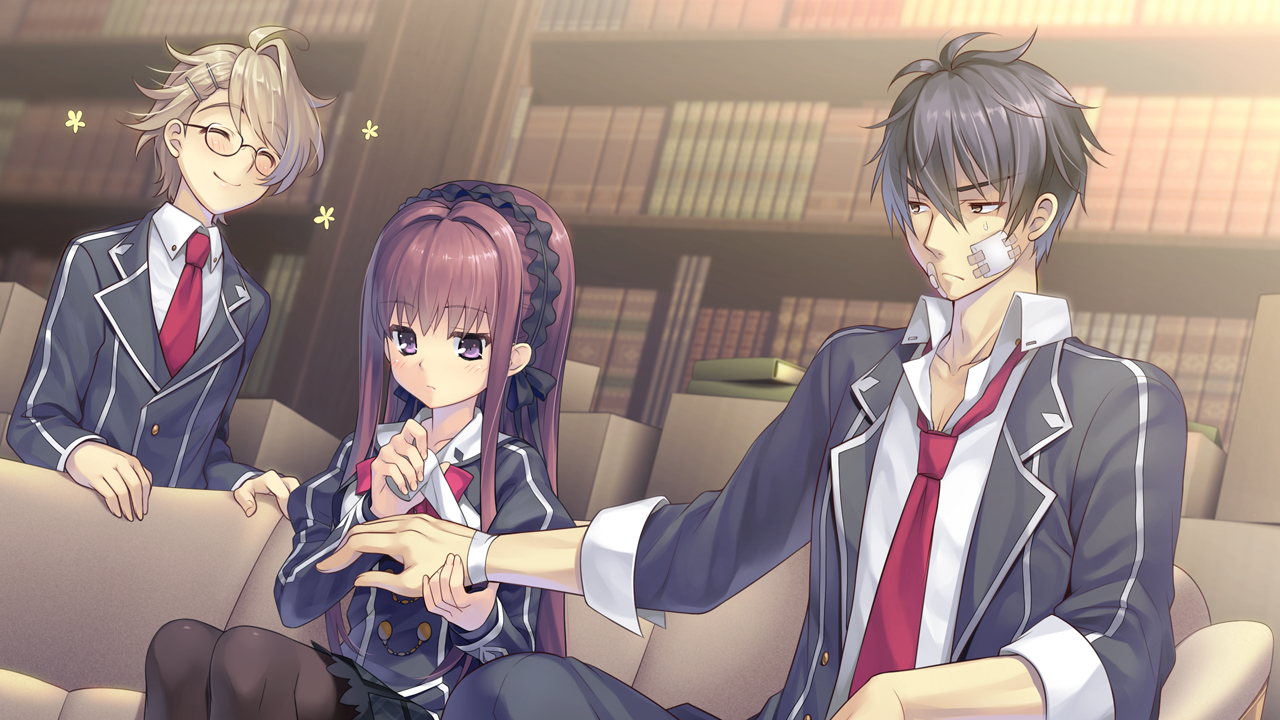
The
central cast of Ley-Line are the members of the Bureau for the
Investigation of Special Affairs which starts out as just Koga,
Kotarou and Ushio and, while it does expand as the games progress,
these three carry the emotional heart and soul of the story.
Their initial relationship is a somewhat rocky one with Koga and
Ushio often rubbing each other the wrong way and Kotarou having to
act as a mediator between them. Seeing them come together as a
skilled team and overcome the Mists they face is one of the
highlights of the trilogy structure of these games. The later
additions to the Bureau all further the group dynamic by forming
connections to the original three and are used to bring out their
flaws and strengths. Chemistry is the greatest asset Ley-Line has and
it makes use of it cleanly with the main cast.
To
have a mystery to investigate there must first be clients and this is
the type of character most Day Students fall into. They are each
introduced in an episode, come into contact with a Mist, have their
problem resolved and then only make minor appearances afterwards.
This is a fairly standard approach for a monster of the week formula and
Ley-Line knows this so it makes sure to spice up these characters
through the bonds they form with the Bureau and how its members
grapple with the consequences of the Mists. Each one of the Day
Students have been created as a pair to the Mist which effects them
and their personalities in some way relate directly to what the
Mist offers, since in universe they are drawn to those who desire their
powers, even if they do not know it. These dynamics act as the main
appeal to each episode and humanise this supernatural conflict which
might otherwise seem distant from reality.
 |
| It is a shame the Night Student never get the time they needed |
It
is when we reach the Night Students where the quality and
consistency of character presentation begins to drop. Despite being the
focus of the overarching narrative thread, they are only really
present in the first game before they fade into the background during
the second game. When they are presented to the player they often
fulfil the same purpose as the Day Students in being clients for the
Bureau. In this role they excel and provide a slightly off-kilter
version due to their inherent supernatural situation which creates
uncertainty about how much of what they say is the truth. This makes them
being dropped like a stone in the second game such a shame as it
would have been interesting to see how this remixing of the
client/Bureau dynamic could have taken further. The choice to reduce
their presence is even stranger when you reach the third game
where all the plot twists about the Night Students are revealed but
they are not there to react to them and feel underdeveloped compared
to the Day Students.
Clockwork Design – Visual, Audio and Technical
When
it comes to the design of these games’ systems and assets there is
a consistency to them that allows the three games to appear as if they
were made at the same time. This philosophy means each game shares
the same overall strengths and weaknesses in these areas and a player
who has an issue with one of the will have an issue with all three
games.
 |
| The Night wonderfully remixes the Day |
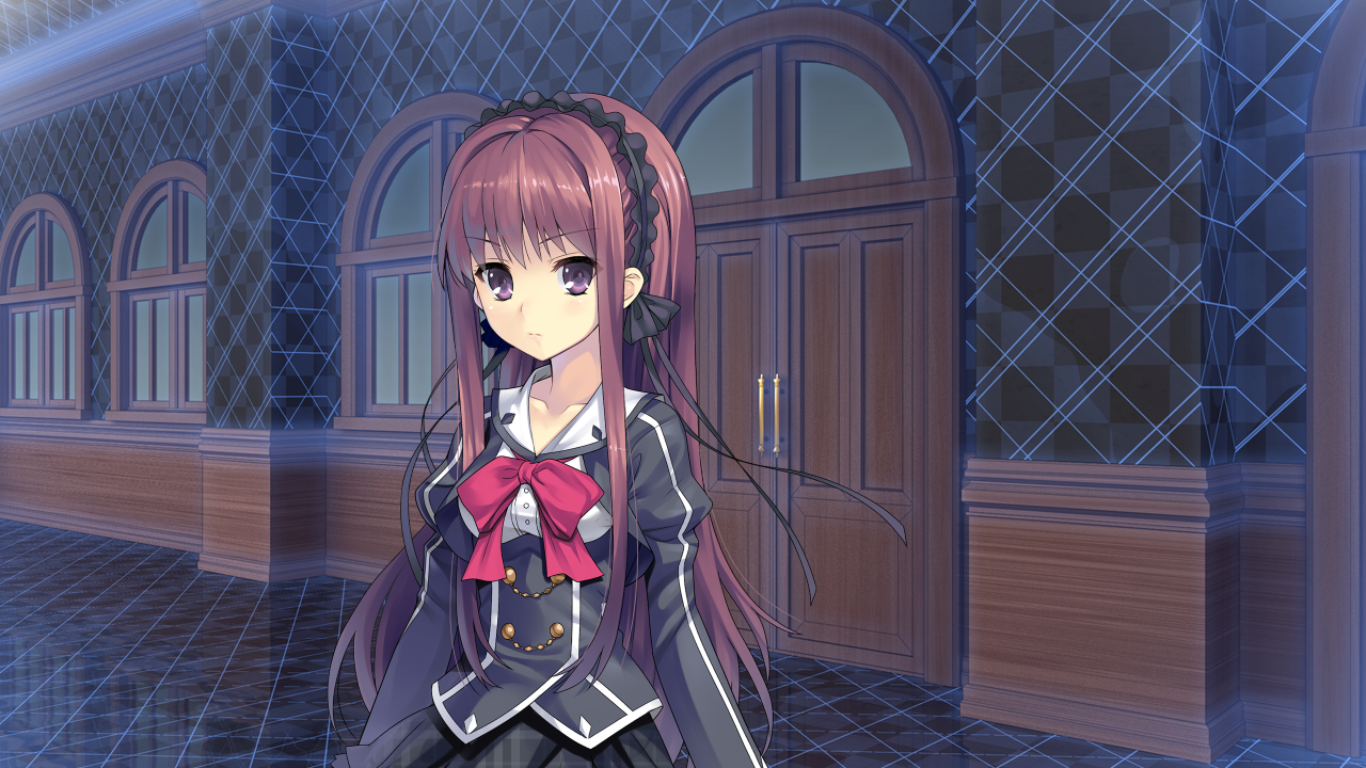
Visual
direction is one of Ley-Line’s most striking aspects. These games
have the ability to form a spectacular divide between the magical and
mundane parts of the setting through their use of colour, backgrounds
and even the Mists. The mundane is much as you
would expect from a visual novel of this genre and consists of the
expected symbols of school life those familiar with the medium have
come to expect. It is only when placed against the altered yet
beautiful magical world and items that its role as a mirror becomes
obvious and the contrast becomes clear. The magical world is one of
strong and permeating colours which seep into everything,
transforming what we know into new forms with regular patterns being
prevalent throughout. Each Mist perfectly encapsulates the feelings
embodied by this idea of magic. They are at once majestic and at the
same time acting as agents of chaos who represent the wild and
dangerous side of magic if not properly controlled. Together these
aspects form a duality but not one without subtly and elements of one
visual style can still be seen in the other showing how the two are interlinked.
On
the flip side the music shows the problems with having similar assets
in each game, they become overly familiar and stale. Ley-Line’s
soundtrack remains mostly static over the course of the trilogy with
each game adding one or two new tracks. The quality of this music is
high but a lot of it is standard in composition and in line with
other games in the medium which means it lacks the identity present
in the visuals. That is not to say there are no standout tracks and
those added by the second and third games are some of the best of the
trilogy. However, this leaves the majority of the soundtrack being
forgettable and ultimately the same from game to game creating a
feeling of repetition that damages the overall experience.
 |
| The soundscape is too similar between games |
For
the most part Ley-Line follows the industry standard when it comes to
technical polish and features. We have the normal suite of
unlockables, customisation options and in game interfaces. The only
aspect in which Ley-Line deviates from the norm is in how it treats its
unlockable side stories and their relationship to one another. These
stories are a small collection of what if and after story style
narratives and they are structured in such a way as to form their own
small thematic package distinct from the main game in its complete
focus on the romantic elements of the games. They have a set a pattern
for unlocking but there is enough flexibility to allow the player to
experience them with a degree of freedom and they rely on their consistent
ideas to hold theses stories together.
Verdict –
This three part mystery blends episodic storytelling and a grand
narrative seamlessly into an intriguing visual novel which play to
the strengths of both approaches.
Pros
+
A gripping overarching mystery which cleverly integrates the Mists
and escalates appropriately.
+
Each episodic story offers a bite sized adventure and these are well
blended into each complete visual novel.
+
Well defined central cast who play off each other and endear
themselves to the player.
+
Routes offer an opportunity to explore aspects of the world and
characters which the main narrative would not have time for.
Cons
-
The first game is almost entirely fluff of no consequence to the
overall narrative or character arcs.
-
Night Students feel underdeveloped and this is not helped by them
fading from the spotlight in the second game.
- Some of the routes
feel unnecessary or badly integrated into the narrative.
2022 – A Year In Visual Novels

Another
year has come to an end and we can now look back on all that has been
achieved with wonder. 2022 was packed full of excellent releases,
from both big names and small indies, which helped grow the medium to
new audiences. The community has also been given a new injection of
life through the revival of old influences and the preservation of
existing ones. It has been a year filled with so many moments which
remind me why I love visual novels so much. Let me take you on a
journey through the highlights of this amazing year, both for those who make visual novels and those who play them.
Important Events

Community Comes Together To Help VN Game Den
It
was on 7th September that VN Game Den announced on their
Twitter they would be shutting down due to their attempts to obtain
support on Patreon/KoFi being unsuccessful. VN Game Den is a site which run by developers within
the medium and provides information, interviews and news about the
indie titles and Kickstarters which deserve their turn in the
spotlight. They serve an important function by giving these titles
some exposure and showing the community the innovation taking place
in these small games. However, this niche does not have the same
popularity as the more main stream big visual novel releases and as
such their supporters were always a small group. When the news of VN
Game Den’s impending shut down became more widely known there was a
ground swell of support for them. Utilising this momentum they were
successfully about to raising the necessary funds to keep going and
make others aware of their work. Here is to hoping that they never
run into same problems again.
Revival of Fuwanovel
From
a story about a site avoiding death to one which has been given an injection of life after being dominant. Fuwanovel
is site consisting of two sides, the
blog, review and news site and the forums. In the past it was once a
hub for the community, but the march of time has not been kind to it
and the focus of attention had shifted away. However, those
in charge of the site decided they would try and revitalise it
through exposing it to as many new people as possible. It was
presented as Fuwanovel getting back on its feet and has included the
resuming of many key activities on the site, such as the VNTS posts,
reviews and thought pieces. I have also been drawn into its orbit and
now upload condensed versions of my articles and reviews in the
forums. Overall, this initiative seems to be a success and it will be
interesting to see what Fuwanovel will do next.
Sunrider 4 Announcement
Sunrider
4: The Captain's Return
announced!!! Alright, this is not really a year defining event in the
grand scheme of things, but it is to me and this is my blog so I’m
going to make you all aware of it whether you like it or not. It is
hard to believe the previous game, Liberation Day, came out in
2016, this is a long time to have to wait for a continuation after
that world shattering ending. What has been shown off
about Sunrider 4 does look like it was worth the wait. The battle
system appears to have undergone a complete overhaul which it
definitely needed as you could feel the existing system creaking
under the strain of the increasingly complicated scenarios. On top of
this the new art is some of the best the developers have ever done and it has
come a long way from the basic style of the first game. Even with
what little has been shown it looks to be an exciting title and with
a release date set for 2023 the new year looks brighter already.
Interesting Visual Novels from Game Jams -

Another
year, another selection of Game Jams and another set of excellent
visual novels showcasing the more experimental side of the medium.
In order to make more people aware of the brilliant titles from these
events, this section will cover some of the more eye-catching games
from three of the year's notable Jams.
NaNoReno 2022
TEISATSU
– Everything about this game exudes fun. From being suddenly
recruited as a spy to the snappy character designs. TEISATSU knows it
is silly and just runs with it.
The Five Steps To Ensuring Momo Graduates Successfully!!!
– Sometimes you just want something simple, bright and colourful
and this game presents those things before pulling the rug out from
under you. The pastel colours hide a more substantial interior. Read
the warnings kids because I did not.
Pierced Veil / Distant Firmament
– Okay, I’ll be honest this was my submission to the Game Jam but
I do truly believe it is worth your time if you are in the right
mood. It is wistful tale about having a drink in a stylish bar as you
wait for the world to end and considering the importance of each
moment of our lives.
Otome Jam 2022
Diffraction
– This demo showcases an otome which emphasises photography as its
core narrative thread and coupled with a strong art style and some
fun banter leaves you wanting more.
ERROR143
– A hot snarky guy and hacking? Sign me up. This game leans heavily into
the hacking angle with its aesthetics and the complete focus on one
guy ends up allowing for him to gain a defined character even in the
short playtime.
SuNoFes 2022
Is it Wrong to Want to be Locked Up, Toyed With, and Tortured By a Hot Guy?!
– Yandere, comedy and BL are unusual bedfellows but here it is
surprising how well they merge together here for a short and
hilarious visual novel. This is very much a one trick pony and it
knows that with its exceptionally short length which works in its
favour.
Pitstop in Purgatory
– Having Purgatory and amnesia in the same story is not exactly an
original idea and there are certainly a few of the expected tropes of
this genre in this game. However, the execution is outstanding with an engaging
point and click element with vivid imagery that elevates it beyond
many of its peers.
Selection Of The Best Visual Novel Releases -
Choosing
which visual novels to put on this list was a hard task since this
year has been jam packed with amazing titles. In the end the games on
this list are all unique and interesting in some way while offering
coherent and complete narratives. So here are the six visual novels
which deserve your attention.
Chaos Head Noah (Steam)

There
are few titles which can simultaneously claim to have started a major
visual novel series while also seeming like it would never get an
English release, despite all its successors receiving the treatment.
2022 finally brought the wait to an end and we were given a chance
to officially experience this mind bending tale of paranoia and
mystery. Occupying the mind of Nishijou Takumi is a distinctive and
memorable experience even with all the time that has passed since the
games original release and the countless similar characters who have
appeared since. He is this strange mix of sympathetic and self
destructive and is a person who on paper should not be compelling but
in practice ends up stealing the show. Obviously this is helped along
by the engaging narrative and the additions of Noah go a long way to
help solve the issues of the original game. This is a must experience
game for anyone interested in visual novels and the types of stories
it can tell.
Witch On The Holy Night (Nintendo Eshop)

A Type Moon visual novel with an official English release, this
is one event which seemed like a pipe dream but here we are with
Witch On The Holy Night. Set in tail end of the Showa era it follows
the life of Shizuki Soujuurou as he finds himself mingling in the
mysterious and dangerous world of magic thanks to two exceptional
women. While this is not the longest Type Moon game what is here is
focused and spends its time well with the cast carrying the overall
narrative. Hopefully the success of this release will encourage Type
Moon to release their other works in English or at least allow a
third party to translate them.
All Ashes And Illusions (Steam)

There is something strangely powerful about this visual novel's
story and its the ability to stay with you long after its conclusion.
This is a story about one man’s extremely unhealthy obsession with
his nursemaid and the consequences that stem from it. Having a
relationship with an unbalanced power dynamic be explored in a
serious fashion makes for an engaging and morbidly fascinating train
crash to watch unfold. All Ashes And Illusions may make you feel
uncomfortable at times but this is all in service of one the years
strongest games in terms of themes and ideas.
Deus Machina Demonbane: Roar Of The Machine God (Patch Download)

Nitro+’s excellent lovecraftian mecha visual novel has already
had a fan translation but it was for a release of the game which was
showing its age. Roar Of The Machine God gives it a much needed face
lift by providing higher resolutions, full voice acting and
additional CGs. This new lick of paint makes the game more accessible
to a wider audience, helping them discover this classic visual
novel. There is something special about its unique mix of over the
top mecha action and its strange interest in the twisted world it
invokes which as many people as possible own it themselves to play in
its new glory.
Hello Lady! (Steam)

Despite releasing at the beginning of a very crowded year, Hello
Lady still stands out as one of the most thoughtful and enjoyable
games released. Its blending of supernatural action with a tale of
revenge and ideas about what it means to be noble creates a package
which keeps you on the edge of your seat while still managing to
demand a deeper examination. This is by no means a perfect game with
issues ranging from pacing to a confusing choice system, but Hello
Lady has the most heart and vision of any title on this list and it
is the sense of purpose that provides the compulsion to keep playing.
If there is one visual novel on this list you should play when you
want something with a soul then Hello Lady is definitely it.
Renai X Royale (Steam)

Let’s end the year with laughter and a comedy game which ramps up
the silliness to new heights. Renai X Royale takes the absurd idea of
love battle royale and puts it into the most mundane and low stakes
environment possible for maximum comic effect. The result is one of
the consistently funny games of the year with its creative take on
the slice of life genre and the trappings of romance. While its jokes
may not always land the fun characters more than make up for it by
also telling some truly heart warming tales of their personal
struggles. This is the cream of the crop when it comes to feel good
visual novels this year and an example of how to get the most out of
your premise.
Things To Look Out For Next Year
Anonymous;Code

Anonymous;Code is the upcoming new
entry in the Science Adventure Series and the first none sequel game
for quite some time. Rather than being set in the present day, the
game takes place in the near future of 2036 and plays up the hacker
sci-fi genre for its driving imagery and loose themes. Given the
pedigree of the series it is a part of there is a certain
expectation of quality. Even at its lowest points the Science
Adventure Series games have been above many of their peers, so Anonymous;Code
should be viewed with a certain degree of excitement.
DRACU-RIOT!

This is yet anther visual novel which seems to be stuck in release
limbo and even the publishers claim that it will be released in 2023
must be treated with some suspicion given how long it has taken to get here.
However, DRACU-RIOT is an older Yuzusoft game which I have hopes of
being the title that finally achieves the potential I see in every
one of their other games. It appears to have a good mix of the serious
vampire side and the slice of life elements to the point where
neither are actively rubbing against one another. Let’s hope it
really does come out this year so we can see if it lives up to my
assessment of it.
Coffee Talk Episode 2: Hibiscus & Butterfly

Drink serving as a gameplay aspect was introduced by VA-11 Hall-A
and has since spawned its own genre. One of the most notable of these
games was the original Coffee Talk which doubled down on the character
story element of the genre and ran with it to great success. Hibiscus
& Butterfly is the direct sequel to that game and appears to
continue its predecessor work with seemly identical mechanics and
narrative structures. Of course this is not a bad thing as the
original was an inherently flexible framework to tell a wide variety
of stories and it will be interesting to see what the developers have
brewed up this time.


 Posts
Posts

